UAE e-invoicing requires businesses and organizations in the UAE to conduct ERP upgrades or redesign processes to accommodate and meet the deadlines of the UAE e-Invoicing implementation. The step-by-step readiness plan helps guide a business through UAE e-invoicing technical integration (ERP integration for UAE e-invoicing), automated workflows, data governance, and change management processes so that they can be compliant with UAE e-invoicing before the deadline in 2027. Using the established roadmap, companies will be able to determine their readiness for compliance via the following events: UAE e-invoicing gap analysis –> go-live hypercare; and then follow this documented process for businesses in Phase 1 (January 2027) and Phase 2 (July 2027).
Phase 0: Current State Assessment (Weeks 1-4)
Objective: To establish a baseline of the capabilities of the UAE e-invoicing (electronic invoice) technical specifications, in order to prioritise any identified gaps.
Step-by-step actions:
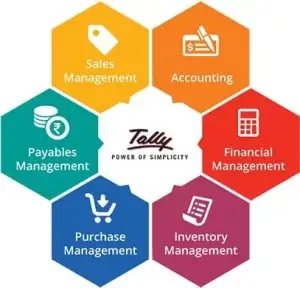
- ERP Inventory: Document billing/invoicing systems (UAE e-invoicing supported [SAP, Oracle, Tally, Zoho], customisations of each, output formats for each).
- Transaction Mapping: Based on volumes of transactions, determine volumes by UAE B2B e-invoices issued, UAE B2G e-invoices, B2C e-invoices (not included).
- Data Quality Audit: Sample 1,000 invoices, check that mandatory fields for UAE e-invoice are complete (TRN, VAT categories, UTC timestamps).
- Phase Classification: Determine whether revenue is greater than or less than AED 50 million, also whether in Phases 1 or 2 for UAE e-invoices.
- Stakeholder Alignment: Formulate a chartered project team (Finance/IT/Taxes/Purchasing).
Deliverable: Gap Analysis Report on UAE e-invoicing with Research-Analysis-Consulting (RACI) Matrix & 12-Month Roadmap.
Phase 1: ASP Selection & Contracting (Months 1-3)
Obtain an accredited service provider (ASPs) in the UAE prior to the appointment deadlines listed below..
Critical milestones:
- Week 5: Download MoF FTA-accredited list of e-Invoicing providers: Create a shortlist of 5 to 7 vendors.
- Week 8: Issue RFPs with criteria for selecting e-invoicing ASPs (i.e., certification by Peppol; ability to connect to ERP; hosting in the UAE).
- Week 12: Execute contract signed by both parties using a 99.9% SLA and pricing of AED 0.75 per invoice with access to the UAE e-Invoicing sandbox for testing purposes.
Notify FTA: Within thirty days, submit confirmation of ASP appointment to MoF.
Phase 2: Technical Foundation (Months 3-6)
Objective: Develop an ERP e-invoicing integration infrastructure for the UAE.
ERP Configuration:
- 100% of UAE e-invoicing mandatory fields must be mapped to the UAE e-invoicing data dictionary.
- Develop/implement UTC Timestamp Generation & Tax Category Codes for the new UAE (S=Standard, Z=Zero, E=Exempt).
- Enable pint AE UBL UAE XML/JSON export capabilities.
API Connectivity:
| ERP → **UAE e-invoicing api integration** → ASP → Peppol/FTA |
Test endpoints: /validate, /sign-transmit, /status polling.
Master Data Cleanup:
- Standardise and verify the accuracy (98%) of a common supplier/buyer TRN database.
- Verify that all VAT treatments associated with 10,000+ items and/or services have been applied consistently.
Deliverable: Produce an end-to-end certified connectivity solution with a validation error rate of less than 2%.
Phase 3: Process Redesign & Controls (Months 6-8)
Objective: Digitize the manual workflow for VAT compliance in the UAE.
New workflows:
- Invoice Creation → An automatic population of the e-invoice XML format in the ERP system → Validation in ASP → Delivery via Peppol.
- Exception Handling → Less than 1% of the invoices will be placed in a manual review queue with a defined escalation process.
- Credit Notes → Link to original UUID; auto-generate negative lines for VAT.
Accounting Controls:
- The Pre-validation Gateway identifies incomplete TRN/VAT records and denies entry into the Workflow.
- Daily reconciliation of data against FTA acknowledgments will occur after transmitting the e-invoice.
- E-invoices will be located in the UAE for a retrieval SLA period of 15 days in case of an audit.
- Document controls will be maintained in compliance with SOX/GRC requirements as they relate to the auditing of the UAE e-invoice.
Phase 4: Sandbox Testing & Certification (Months 8-10)
Objective: Go into production via UAE electronic invoicing sandbox.
Test Scenarios (500+ cases):
- Standard B2B Invoice (5%VAT).
- Zero-Rated Export (Free Zone Supply).
- Credit & Debit (Multiple Currencies).
- Reverse Charge/Margin Scheme.
- Edge cases (Negative Lines, High Volume).
Success Criteria:
- ≥98% First Time Acceptance.
- <5 Seconds Latency (end-to-end).
- 7 x 24 Stress Test (Physiological test of no failed attempts).
FTA Certification – Complete test results to obtain production credentials.
Phase 5: Pilot Rollout & Training (Months 10-11)
Objective: Partially controlled go live with 80 percent team readiness.
Pilot Scope: 10 largest customers (80 percent of volume).
| Week 1-2: 10% volume → Week 3-4: 50% → Week 5-6: 100% |
The Training Program will occur over the course of four weeks. It will consist of the following components:
- Finance (Level One): Exception handling, tracking of status updates to verify that they have either been resolved or remain active.
- AR Team (Level Two): Dashboards used to transmit data, and rejection analysis used to determine the success or failure of transmissions, including detailed statistical analysis.
- IT (Level Three): Monitoring of API usage and implementing automated failover procedures.
Change Champions: Each department will have five upgrades to provide peer-to-peer support.
Phase 6: Full Production & Hypercare (Months 12+)
Objective: Achieve 100% UAE e-invoicing compliance for all UAE Business to Business (B2B) e-invoicing and all UAE Business to Government (B2G) e-invoicing transactions in accordance with UAE e-invoicing phases deadlines.
Go-Live Checklist (Day 0 execution):
- All Accredited Service Provider (ASP) production keys have been acquired and validated from all ASPs located within the UAE as of today
- An ERP parallel run with zero discrepancies has been completed and tested (no other discrepancies were found) after seven (7) days of the parallel test completing and testing had taken place.
- A minimum of 80% of all users receiving training/certification on ASP and its applications have successfully passed certification or training prior to go-live date.
- The UAE Federal Tax Authority (FTA) was notified of the go-live date 30 days prior to go-live for ERP.
- The Disaster Recovery Plan (DRP) was tested (using full outage simulation) as part of post go-live rollout.
- Established e-invoicing API integration monitoring dashboards.
Hypercare KPIs (90-day post-go-live monitoring):
- Rejection Rate: < 0.5% (Target is 98.5% for First Pass Acceptance)
- API Uptime: 99.95% (Maximum Annual Downtime = 4 Additional Hours)
- End-to-End Latency: < 5 Seconds Average Transmission Time
- Customer Satisfaction: >90% NPS from Top 20 B2B Buyers
- Data Completeness: 100% of UAE e-invoicing mandatory fields are complete and populated.
Optimisation Roadmap (Months 13-18):
- AI-driven error prediction: Machine Learning to identify high-risk invoices before validation
- Self-service portals: Buyers are able to view the QR Code for verifying UAE e-invoices directly
- Advanced analytics: Provides dashboards to show how much improvement will happen to cash inflows for the UAE’s e-invoicing processes based off DSO trends and expected payment dates
- Volume scaling: Allows for companies to grow by 3 times without degrading service levels (SLA’s) to their customers.
Exception Escalation Protocol:
|
Steady-State Governance (Month 18+):
- Monthly Data Quality Council: Ongoing review of UAE E-invoicing data dictionary compliance.
- Quarterly FTA Reporting: Issuance of a quarterly audit report to prove we are in compliance with UAE E-invoicing regulations.
- Annual ERP Regression: Testing the various ERP solutions (SAP, Oracle, Tally, and Zoho) to ensure compliance post upgrade.
- ASP Contract Review: Ongoing assessment of the performance of the various ASPs providing UAE e-invoicing solutions.
Success Metrics (12 months post-go-live):
📊 Invoice Processing Cost: -65% vs manual baseline
💰 AR Days Outstanding: -15 days improvement
✅ First-Pass Rate: ≥98.5% sustained
🛡️ UAE e-invoicing penalties Exposure: Zero incidents
🚀 Benefits of e invoicing in the UAE: Fully realised
Transition to BAU: The Hypercare Team is still intact, while Finance Controls are incorporated into standard Financial Key Performance Indicators. Automated Invoicing for the UAE becomes a distinctive competitive advantage to enable digital VAT compliance.
Proven Result: Early adopters of Phase 1 achieve a 99.2% compliance rate compared to an 87% compliance rate for late starters. This results in an estimated saving of at least AED 1.2 million annually in potential e-Invoicing penalties from the Government of the United Arab Emirates.
Master Data Governance: The Hidden Success Factor
90% of e-invoices are rejected due to low-quality master data which means governance will determine if a business is compliant with UAE e-invoicing regulations:
Master Data Governance Framework:
| Data Domain | Accuracy Target | Owner | Automation Opportunity | Validation Rules |
| Customer TRN | 99% | CRM Team | API lookup vs FTA registry | UAE e invoice mandatory fields – reject null/invalid TRN |
| Product VAT Category | 98% | Item Masters | Tax engine integration | Standard(5%), Zero-rated(0%), Exempt(E), Reverse Charge(RC) |
| Address Standardisation | 95% | Master Data Management | Geocoding service | MoF-approved UAE address format validation |
| Payment Terms | 100% | AR Master | Contract system sync | Net30, Net60 codes mapped to days, IBAN mandatory |
| Tax Registration Status | 99% | Tax Team | Automated TRN status check | Active VAT status required for B2B transmission |
Weekly Data Stewardship Council (mandatory governance forum):
- AR Manager: who manages customer master data that consists of UAE B2B E-invoicing buyer data.
- Procurement: supplier TRN validation, part of UAE B2G E-invoicing requirements
- Product Controller: tax category governance on items
- IT: real-time Validation Gates as part of the UAE E-invoicing API integration
- Tax Lead: certification of FTA compliance
Data Quality KPIs (tracked daily during pilot):
- TRN match rate – ≥99.0%
- VAT category completeness – 100.0%
- Address validation pass rate – ≥95.0%
- Master Data-related rejections – ≤5.0% of total rejections
Automation Roadmap:
- Week 1-4: Real-Time TRN validation API (FTA UAE e-invoice)
- Week 5-8: Tax category rule engine integration
- Week 9-12: Address standardisation service deployment
Preventive Controls:
- Pre-creation Gate: blocks an invoice from being created when key Mandatory Fields in UAE E-Invoicing requirements are not supplied.
- Weekly Cleansing Jobs: Automated TRN/aAddress update.
- Exception Queue: Manually reviewing less than 100 records per month.
Proven Impact: Companies with mature data governance experience a significantly higher percentage of 1st pass acceptance (98.5%) than companies without matured data governance (72%). According to UAE tax invoice regulations, if an invoice is rejected, the penalty does not exceed 2,500 AED per rejection.
People & Change Management Framework
RACI Matrix for UAE E-Invoicing Implementation:
- The Person (or financial department) responsible for UAE e-invoicing compliance as well as overall UAE e-invoicing risk.
- The business manager (CFO) manages the implementation, testing and operation of the UAE e-invoicing project through ERP, ASP, and e-invoicing application environments.
- The individual (Accounts Receivable manager) will ensure that the required mandatory fields and validation of TRN and mapping from the data dictionary of the UAE e-invoicing functionality are correct.
- Technical Lead – Provides API Integration for UAE e-Invoicing transactions and provides configuration for PINT-AE UBL UAE and for error management during integrations.
- The process owner for the redesign of how we will receive, match, and retain B2B e-Invoices from the UAE (Superintendent of A/P).
Communication Cadence:
- Monthly Steering Committee— C-Level Executives Receive Reports to Report on the Project’s Date of Completion, Budget, Risk, and Non-Compliance with UAE E-invoicing
- Weekly Multi-Disciplinary Meetings—Project Managers Provide Updates of UAE E-invoicing Remediation of Gap Analysis Progress, Planning of ASP Integration Milestones, and Training Completion
- Daily Pilot Meetings—Continued Monitoring of the KPIs for Live B2B Transfers and the Rejection Rate for UAE E-invoices—QR Code Validity.
Training Programme Structure (4-week delivery, 80% adoption target):
- Level 1 Finance Users (2 hours) – Workflow Exceptions, FTA Report for UAE E-invoicing Status requiring manual corrections
- Level 2 A/R of A/P Teams (4 hours) – Workflows to monitor invoice transmission status, the reason for invoice rejection, and confirmation of FTA UAE digital signature on E-invoices.
- Level 3 IT / Support (8 hours) – API Health Check and Failover Procedures; coordinating with service providers to comply with FTA UAE; verifying SSL certificates for all operators; developing an Outage Plan.
Change Champions Network: Deploy 5 power users per department (20 total) for peer-to-peer support, gamified adoption tracking (leaderboards, badges).
Training ROI Metrics (measured post-go-live): 3x productivity gain within 90 days, 70% reduction in manual invoice processing errors, 95% user competency certification.
Risk Mitigation & Contingency Planning
Top Risks & Mitigations:
- Late ASP Integration
- Impact: Major (blocks UAE e-invoicing penalties)
- Mitigation: Conduct POCCs (concepts of proof via vendors) to select an e-invoicing ASP provider in the UAE and run in parallel with two pre-accredited service providers (shortlisted); include Go-Live penalty clauses in the contract
- Data Migration Failure
- Impact: Major (corrupted mandatory fields of e-invoice in the UAE)
- Mitigation: Phased cutover ((10% → 50% → 100% volume); 30-day parallel run with automated reconciliation; have rollback plan and tested
- Peak Volume Surge
- Impact: Moderate (increased month-end and payroll invoice)
- Mitigation: Conduct load tests at 3 times expected volumes (running >10,000 invoices/hour); have API scalability to adjust to peak demand (UAE e-invoicing API integration); batch API processing through the weekend
- User Resistance
- Impact: Moderate (at least 70% of users need to adopt)
- Mitigation: Establish Change Champions (5 per department) to advocate for adoption; utilize gamification (create competitive ranking); require/use certification prior to Go-Live; get sign-off for UAE e-invoicing ready checklist
FTA Outage Protocol (mandatory per Ministerial Decision 243/2025):
- Detection – if there is no polling for more than 15 minutes
- Notification – via the FTA’s emergency portal and within 2 business days (via both email and portal submission)*
- Evidence – screenshot of all transmission failures made and the volumes involved in each failure
- Recovery – resubmission of all batches after the ASP has been restored; reconciliation report
- Penalty Avoidance – Documented Notification = Compliance achieved even during an outage
Cybersecurity Contingencies:
- Failure of ASP – may perform a failover to any of the duly accredited e-invoicing providers per the FTA’s contract clause
- Failure of ERP – may use paper-based manual exemption workflow for up to 48 hours, as pre-approved by FTA
- Data Breach – immediate storage of e-invoices in the UAE isolation while preserving the forensic audit trail
Lessons Learned Integration:
- Post-mortem of all rejections > 0.5% performed weekly
- Refresh UAE e-Invoicing Gap Analysis monthly
- Continue to build customer feedback loop (top 20 B2B buyers)
Proven Impact: Companies with mature contingency plans have demonstrated a proven effect of their planning efforts in achieving 99.7% uptime vs. an average 94.2%, thereby avoiding AED 2.5M + worth of penalties from their exposure to downtime in the UAE.
Benefits Realisation: Measuring ROI
Quantitative (post 6 months):
- 65% Reduction in Cycle Time for Invoice Processing
- 15 Day Reduction in Accounts Receivable Days
- 80% Reduction in Error Rates
Qualitative:
- Cash Flow Improvement in UAE E-Invoicing
- Automation of Invoicing in UAE
- Digital VAT compliance ready for audits in UAE
Conclusion
The e-Invoicing Implementation Guide is designed to provide Organizations with a means of complying with the UAE e-Invoicing regime while also transforming their burden of compliance into an advantage. The Implementation Guide is structured as 6 Phases. Each Phase consists of steps to complete your UAE e-Invoicing Gap Analysis through Phase 1 and to conduct Testing in the UAE e-Invoicing Sandbox through completion of Phase 2, thereby ensuring that the Organization can successfully complete Phase 1 (01/01/2027) and Phase 2 (01/07/2027) and provide its Organization with the benefits of e-Invoicing in the UAE.
Organizations should commence Phase 0 now and determine how many UAE e-Invoicing Phases they must complete, when to commence their UAE e-Invoicing Gap Analysis, develop a shortlist of UAE Accredited Service Providers (ASP’s), and be aware that early demonstrators have at least 12 months to begin voluntary testing before being subject to any future penalties imposed for non-compliance with the UAE e-Invoicing regime.
Frequently Asked Questions (FAQs)
-
What are the first steps in the UAE e-invoicing implementation guide?
Phase 0 consists of: Identify and complete the assessment of all existing ERP systems (SAP/Oracle/Tally/Zoho) in your business; Explore and gather all total volumes for B2B e-Invoices for the UAE; Verify and validate all Mandatory Data requirements for the UAE E-Invoice, and; Understand how the Phases are being deployed (Phacing) in the UAE (Phase 1 or Phase 2).
-
When should businesses start choosing an e-invoicing ASP uae selection?
Phase 1, find ASP in Q1 or by no later than the due date of 07/21/2026 for all Large Business customers; If you have not selected your ASP by about mid Q3 of 2026, you will miss the deadline to have access to ASP or the Sandbox E-Invoicing for your Phase 2 (SMEs). By selecting early, you will have the ability to use the ASP or complete your E-Invoicing Sandbox testing prior to any deadlines.
-
How long does UAE e-invoicing ERP integration typically take?
Phase 2 (mapping) will require approximately three (3) months to six (6) months. You will need to complete your E-Invoice Data Dictionary, create the UBL UAE XML/Json Files from your PiN AE, and complete your api development for E-invoicing. You will not be able to complete your Sandbox testing (Phase 4) until your E-INVOICE data is less than 2% validation error rate.
-
What master data issues cause most UAE e-invoicing penalties?
The significant reasons for 90% of e-invoices being rejected is because they do not have adequate TRN population, gaps in the VAT categories, and improper Address formatting. To maintain a 98%+ delivery quality level for transmission purposes and minimize penalties associated with e-invoicing in the UAE, which on average, are AED 2,500 per e-invoice, the Data Stewardship Council has weekly meetings.
-
How to measure success post UAE e-invoicing 2026-2027 go-live?
It is anticipated that benefits from e-invoicing will be credited within six months, with improved cash flow through the manner in which the UAE implements e-invoicing and with the implementation of automated invoicing. Hypercare KPIs: e-invoice rejection rate <0.5%; API availability rate 99.95%; processing costs -65% compared to current practice; and AR DSO reduction of -15 days.