The worldwide manufacturing environment is changing fast, and sustainability has become a driving force. Manufacturers are increasingly realizing that being environmentally responsible is not just another regulation to deal with, but an opportunity to gain a competitive edge.
As we can see, ERP systems have become increasingly critical as manufacturers look to promote sustainability as part of their manufacturing practices.
For companies in the UAE, where holistic sustainability is a government goal, using ERP to achieve green manufacturing and ESG (Environmental, Social, and Governance) compliance is vital to ensuring success in 2025 and beyond.
The Imperative for Sustainable Manufacturing in the UAE
The UAE is one of the most sustainable jurisdictions in the world, evidenced in strategic programs such as UAE Vision 2021 and the UAE Net Zero 2050 strategic initiative, to name a few.
The commitment to sustainability flows through to manufacturing, where there is an increased focus on resource efficiency, waste reduction, and responsible production. The demand from consumers for green products is also growing, forcing companies to consider sustainable operational models.
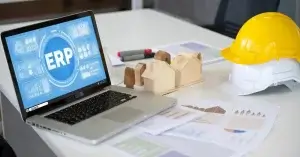
In this constantly changing world, manufacturing ERP solutions UAE are key to empowering companies to monitor, track, manage, and report on their environmental impact.
ERP as a Catalyst for Green Manufacturing
Today’s ERP systems do more than manage finances or run operations; they provide the platform to manage an entire manufacturing enterprise and integrate and optimize every aspect of the organization. With this level of capability, they are well situated to enable sustainability.
1. Optimizing Resource Consumption and Waste Reduction:
One of the key tenets of sustainable manufacturing is utilizing resources effectively and limiting waste. ERP systems can provide truly impressive visibility into what is happening with inventory levels, processes, and the flow of goods in the supply chain in real-time.
Advising decision-making based on the analysis of material use, energy consumption, and waste creates the opportunity for enterprises to determine where there are bottlenecks and inefficient models. The ERP system can provide part of this process by integrating complementary modules on functions such as inventory management, which ensures limited over-production that can lead to obsolescence and waste of materials.
Likewise, an ERP system will be able to provide a quasi-prediction to the production and use of energy by scheduling energy use when consumption levels are lower, enabling managers to ensure efficiency in peak times. Take, for example, a multinational industrial manufacturer in Dubai who harnessed an ERP system and allowed the system to parse out unit energy consumption by product.
The company was able to unearth where the significant energy consumption was occurring by product unit, and improve upon run times for machines and reduce electricity consumption by 15% within the first year of the new system implementing their sustainability ERP strategy and effort in green manufacturing ERP UAE.
2. Enhancing Supply Chain Sustainability:
Supply chain climate implications are critical to the product’s environmental impact. ERP systems provide the ability to do end-to-end supply chain management. ERP systems allow businesses to track where raw goods come from, analyze supplier sustainability credentials, and improve logistics to reduce carbon emissions.
In an ERP system, supplier relationship management (SRM) capabilities give companies the tools to select suppliers that demonstrate responsible sourcing through ethical sourcing and environmental stewardship.
More so, linkages between ERP and transportation management systems (TMS) also provide logistics experts with systems to optimize delivery routes that reduce fuel and emissions, which is important for sustainable manufacturing in the UAE.
3. Facilitating ESG Compliance and Reporting:
Environmental, Social, and Governance (ESG) will continue to drive investment decisions and stakeholder expectations for the foreseeable future. This is quickly prioritizing ERP for ESG compliance UAE. ERP systems consolidate information about energy use, water use, greenhouse gas emissions (GHG), and waste disposal.
This information is used to create published ESG reports that are factual and transparent, assist with compliance with regulatory standards, and demonstrate progress toward sustainability objectives.
An ERP system makes it simple to collect and report sustainability data, automate tasks, improve compliance, and increase the credibility of sustainability disclosures.
Key ERP Strategies for 2025
To maximize the impact of ERP on sustainable manufacturing, businesses in the UAE should consider the following key strategies for 2025:
1. Embracing Cloud ERP UAE Solutions:
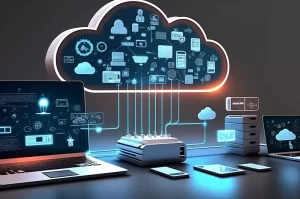
Utilizing Cloud ERP solutions has many benefits for sustainable manufacturing. Concerning the environmental impact and carbon footprints as a result of the energy used by on-premises servers, Cloud ERP solutions remove the need to keep these energy-intensive servers present.
Cloud Platforms are also scalable and flexible, allowing businesses to not adhere to rigid operations and adapt to changing operational requirements without investing in complementary hardware.
Accessible by nature, Cloud Platforms allow for work to be done from anywhere, which reduces time in transportation and travel requirements that can add unnecessary carbon footprints.
2. Integrating AI ERP Systems UAE:
It is so much more than just ERP systems; AI and Machine Learning are changing the capabilities surrounding ERP. For example, an AI ERP can offer predictive analytics that allow businesses to easily forecast the demand, optimize production runs, and reduce overstocking.
AI and ML can also review and analyze enormous datasets from a business’s manufacturing operations to expose patterns of wasted energy or a lack of efficiency in production or equipment. This allows a business to implement proactive changes. Ultimately, this automation improves efficiency and preserves resources.
3. Leveraging IoT-enabled ERP UAE:
The Internet of Things (IoT) provides real-time data from sensors embedded in machinery, equipment, and production lines. Integrating this data with ERP systems creates an IoT-enabled ERP UAE environment that offers unprecedented visibility into operational performance.
Manufacturers can monitor the energy consumption of individual machines, track waste generation at various stages, and even predict maintenance needs to prevent costly breakdowns and resource wastage. This real-time intelligence empowers businesses to make swift, data-driven decisions that enhance sustainability.
4. Focusing on Data Analytics for Continuous Improvement:
Real-time data is provided by the Internet of Things (IoT) in the form of sensors embedded in machinery, equipment, and production lines. Using this data in combination with an enterprise resource planning (ERP) system provides visibility to a degree that has never been achieved in manufacturing by creating an IoT-enabled ERP UAE space.
The data allows manufacturers to see how much energy each machine uses, track waste at different stages of the production process, and estimate when maintenance is needed to avoid costly breakdowns and wasted resources. Having access to this information in real-time enables businesses to make decisions quickly and improve sustainability by making informed decisions based on data.
Conclusion
As we move into 2025, the relationship between sustainable manufacturing and ERP systems will become increasingly apparent. For companies in the UAE, deployment of a state-of-the-art ERP sustainability functionality is not about implementing some fancy new technology; it is a process of establishing the company’s track to long-term sustainability through growth and competitiveness.
The more manufacturers can organize, optimize, and operate their operational activities based on efficient use of resources, transparency of ESG reporting, and utilization of cloud-based, AI, and IoT integrations, the better path manufacturers will take for a sustainably profitable future.
Which of these strategies are aligned with your manufacturing objectives for 2025?
The question is no longer “if” but “how fast” manufacturers will implement embedded strategies into their business operations to fully leverage the advantages of green manufacturing.
Interested in learning how ERP can facilitate your sustainable manufacturing strategies? Contact us for a consultation with one of our experts today!